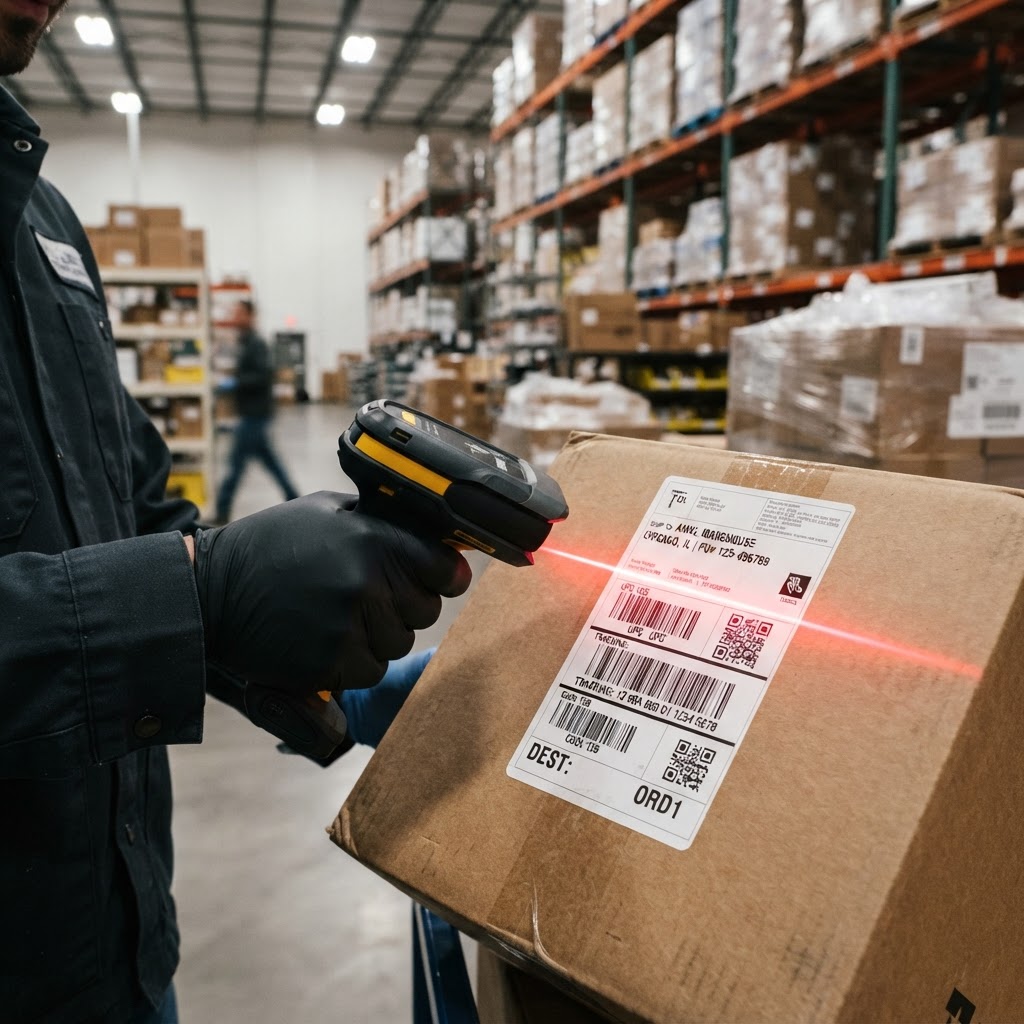
A shipment can be picked correctly, packed correctly, and still generate a chargeback, because the label on the carton and the digital record describing that carton disagree with each other. Retailers reconcile physical shipments against Advance Ship Notices (ASNs) largely by machine, and a mismatch between the two is one of the fastest ways to trigger a deduction that has nothing to do with whether the order itself was fulfilled correctly.
Where the Physical and Digital Records Diverge
Most retailers require GS1-128 carton labels, which encode information like the shipment identifier, item number, and quantity in a barcode a warehouse scanner reads automatically. The ASN, the EDI 856, describes that same shipment in a separate electronic document sent ahead of the truck’s arrival. The two are supposed to describe one shipment consistently. In practice, they often do not.
A few points in the workflow are where that gap tends to open:
- Label generation happens separately from ASN generation. When carton labels are printed from one system and the ASN is built from another, a change made in one place, such as a last-minute quantity adjustment, does not always propagate to the other.
- Pack configuration changes after the ASN is sent. If a carton actually shipped contains a different item count than what was planned when the ASN was generated, the receiving warehouse’s scan will not match the digital record.
- Multiple SKUs in one carton get simplified on the label. A retailer’s labeling spec often has specific rules for mixed cartons that differ from single-SKU cartons, and a workflow built around the simpler case can produce a label the scanner rejects.
Why This Specifically Causes Chargebacks
A receiving warehouse that scans a carton and gets a result inconsistent with the ASN typically has two options: hold the shipment for manual review, which delays putaway and can affect on-time delivery scoring, or accept it and note the discrepancy, which usually shows up later as a chargeback tied to labeling or ASN accuracy. Neither outcome depends on whether the correct product actually arrived. It depends entirely on whether the paperwork, physical and digital, agreed.
Closing the Gap Between the Carton and the Record
The workflows least prone to this problem generate the carton label and the ASN from the same underlying shipment data, at the same point in the process, so a change to one is reflected in the other automatically. Supplier EDI solutions validate ASN data against retailer-specific label requirements before a shipment leaves the dock, which catches a mismatch while there is still time to reprint a label rather than after a chargeback notice arrives weeks later.
Spring Systems supports the retailer-specific ASN and labeling requirements for more than 500 trading partners, including Walmart, Target, Amazon, Home Depot, and Costco, each of which has its own carton labeling spec. A U.S.-based support team is available 24/7 for suppliers working through a labeling rejection before a shipment deadline.
Suppliers who want a specific retailer’s labeling requirements walked through in detail can schedule a demo with a Spring Systems specialist.